|
 (102126)
Suspiria is Dario Argento’s violent thriller about a series of murders at an
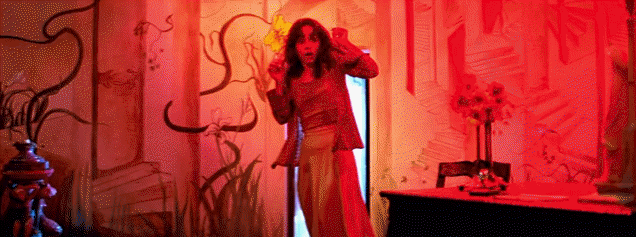
Italian dance school. The film is shot like an opera, complete with vivid
colors, over-the-top acting, and booming, bombastic music. The title refers to Mother Suspirorium, one of the three mythical twin witches in Italian folklore who
together
secretly rule the world. Each film in Dario Argento’s three-witch trilogy: Suspiria (77), Inferno (80), and Mother of Tears (2007).
Each film features one of these three
witches.
When
Suspiria was originally released in 1977 it received very mixed reviews from
critics. Since then it has undergone re-evaluation and today receives great
acclaim; so much so it’s now considered a twisted cult classic, and it's one of
my own personal favorites. I ranked it at No. 44 on my list of the 100 greatest
horror films ever. For context, the 1931 version of
Dr. Jekyll and Mr. Hyde
(which I reviewed last week) I ranked at number 13. You can find my full list here:
Vito’s Best Horror Film List – ART INTERVIEWS.
Like Argento’s other films, Suspiria has a dazzling visual style, but it doesn't
always follow traditional film narrative logic. Like The Mother of Tears, the
film gets stronger as it gets increasingly irrational. As the film builds, it
makes the viewer feel like they are trapped in a waking dream or a
drug-influenced bout of psychosis. Perhaps this is because the film is not based
on a coherent story, but is instead inspired by Thomas De Quincey’s Suspiria de
Produndis, a poetic essay largely composed of images from the English author’s
opium dreams.
The film may be the finest and most influential example of what later became
known as a giallo film. “Giallo,” the Italian word for yellow, refers to the yellow dust
jackets usually found on cheap, violent Italian mystery books. These stories often
have amateur detectives who try to solve mysteries that involve brutal serial
killers who often wear one or several pairs of gloves. Some of the most
prominent giallo directors include Mario Bava (Black Sabbath and The Twitch
of the Death Nerve), his son Lamberto Bava (Demons), and the most popular of
them all, Dario Argento, whose biggest hit in America was in fact Suspiria (1977). These films
went on to heavily influenced U.S.
slasher films such as: Halloween, Friday the 13th, and A Nightmare on Elm Street.
Giallo also influenced many non-horror films such as William Friedkin’s Cruising (1980), Brian De
Palma’s Dressed to Kill (1980), Body Double (1984), Basic Instinct, S7ven,
and Kill Bill II (it even has a chapter named after a giallo film). More
recently the Ti West trilogy of films
X
(2022),
Pearl
(2024) and
Maxxxine
(2024) all show a heavy giallo influence.
Beyond the visual style, there are several tropes also found in giallo films
that make them identifiable. The plots often involve Italian folk magic and
numbers. Surreal sensory barrage with effects that are hard to shake off.
Most featured actresses late in their careers, like Carole Baker,
Anita Ekberg, and Barbara Bach, who struggled to get good roles in Hollywood, as
well as international actors past their peak, such as Dave Hemmings and Farley
Granger. Additionally, giallo films often featured superb set design, vibrant colors with lots of red
and blue, and exquisite shot composition. Like in Antonioni’s films, many
individual stills would look great if frozen into paintings.
Since Italian is a much more emotional language than English, the acting and
dubbed dialogue can seem exaggerated or hyper-real in English, like theatre
acting. All of this makes the film feel unnatural, fantastical, and foreign to
American eyes, which makes it feel more special. Giallo films always
look more visually impressive than their stories, and the stories are often stupid and
lose something in translation. This is not an uncommon problem with dubbed
foreign films ranging from Toho's kaiju monsters to Steve Reeves Hercules epics
of the fifties.
Suspiria disorients the audience with odd stylistic choices, like using outdated
Technicolor film stock that floods the image with vivid, unnatural color and
gives his scenes an unreal, fairy-tale look. Argento assimilated the language of
the fantastic and was influenced by F. W. Murnau, Fritz Lang, Alfred Hitchcock,
and Walt Disney, as well as the fiction of Poe and De Quincey (his Der Profundis
inspired this film)
Suspiria stars Jessica Harper from Phantom of the Paradise (74), Love and Death
(75), and My Favorite Year (82) as Suzy Bannon. The film also features a former
50's film noir star and Dark Shadows actress Joan Bennett as the school’s headmistress, who knows
more than she lets on.
The school where the film takes place is oppressive and malignant. A teacher is
needlessly cruel to a blind student. Later, the blind man is killed by what he
loves best, his own comfort animal, a normally docile black dog. Who is
temporarily possessed. After the death, one of the students says, “Maybe there
is a hex on this place, and we need to call on an exorcist.” This almost cues a
piece by the eerie Italian prog band Goblin that echoes the Exorcist film theme
and the creepy, campy music matches the visuals perfectly. The band has been
associated with giallo films for years, and I once saw them perform their own
soundtrack live during a screening of Demons 2 (86).
Suspiria has one of cinema's most memorable and shocking openings. Suzy arrives
at school where she knows no one. As she arrives, another girl runs through the
halls during a loud storm, and she is repeatedly stabbed by an assailant whose
identity is hidden, and her gory body is hung up like a rag doll or puppet. As
the shards pierce the host, the blood forms a pool that resembles an outline of
the witch, which is the first clue to the identity of the killer. Another clue
comes when a dying girl mumbles “secret irises” to Suzy, a detail that becomes
important later in the film.
And that’s just the first 15 minutes. Later, Suzy faces a shower of maggots that
fall from the ceiling. This doesn't seem like a natural phenomenon; it seems to
be caused by witchcraft, and the unusually dumb headmistress desperately offers
the idiotic explanation that the maggot shower must have come from spoiled food.
Later, Suzy faces an attack from an oversized bat and a cackling, mummified
magical assailant. Each successive challenge is more outlandishly bizarre and
frightening than the last, until the film reaches its startling, unforgettable
conclusion which follows dream logic more than ordinary sense. Eventually, we find out that A Witch, the black queen, founded the Town Academy)
who had been expelled from different countries. The academy teaches dance in
public, but in private the dominating witches change, terrorize, and destroy the
lives of everyone around them to accumulate wealth and power.
Suspiria does not always make total sense (how could these constant murders take
place without chasing off all the students?) and often it lacks psychological
depth. But it still works magnificently visually. If you don’t think too much,
you may find this film a frightening, groundbreaking, and unforgettable
mandatory cinematic experience. And it’s as scary as hell.
|